Skip to content

Product Designer & Builder — Liège, Belgium

The build got cheap.
Judgment didn’t.

I take an idea all the way to a shipped product — solo and fast. A UX/UI foundation is what lets me direct AI toward quality instead of just prompting it. Four real products carry the proof.

Start a conversationSee the work

01 — The shift

The bottleneck moved.

Writing the code stopped being the hard part. Knowing what good looks like — and steering a machine to it — became the whole job.

Anyone can generate a screen now. Generating the right screen, in the right order, with the right trade-offs, is a different skill — and it did not get cheaper.

That skill has a name in my trade: judgment. It is what decides which feature never gets built, which edge case matters, which number needs a source next to it. AI accelerates the part I already knew how to do; it does not replace the part that decides.

02 — How I work

Four things I hold to.

  • 01

    Judgment over keystrokes

    Design decisions come first: what to build, what to cut, what "good" means here. The code follows from that — faster than ever, and pointed in the right direction.

  • 02

    Idea to product, solo and fast

    Research, UX, interface, backend, deployment. One person holding the whole thread means no hand-off loss, no coordination tax, and a shipped thing at the end of it.

  • 03

    Built to be trusted, not to demo

    A demo survives one meeting. A product survives real data, real edge cases and real users asking where a number came from. I build the second one.

  • 04

    A teacher’s communication

    Years of teaching taught me to explain a technical trade-off to someone who does not want a lecture. You will always know what I am doing, why, and what it costs.

03 — AI adoption

Your team already has AI. Few teams have it working.

Licences, a couple of enthusiasts, and no agreed way of working — that is where most teams are. I come in, find the repetitive work that is actually worth automating, and install flows into the tools your people already use. You keep them: documented, taught, and owned by someone inside the company.

The bottleneck is never the model. It is knowing which work deserves one.

  1. 01

    Find the work worth automating

    A pass over how the team really works — what repeats, what is slow, what breaks. Not everything deserves a flow, and most of the gain sits in three or four places.

  2. 02

    Build the flows in your tools

    Assistants, prompts and small automations wired into the stack you already pay for. Tested against your real cases, not a demo dataset.

  3. 03

    Draw the line AI does not cross

    What gets checked by a human, what never leaves the company, which calls stay yours. The limits are part of the design — that is what makes the rest safe to use.

  4. 04

    Hand it over so it survives me

    Written down and taught to the people who will run it. Years of teaching is the part that makes this stick: a flow nobody understands is a cost, not a tool.

04 — Selected work

Four products, four kinds of proof.

Not case-study theatre. These are live products I designed, built and shipped.

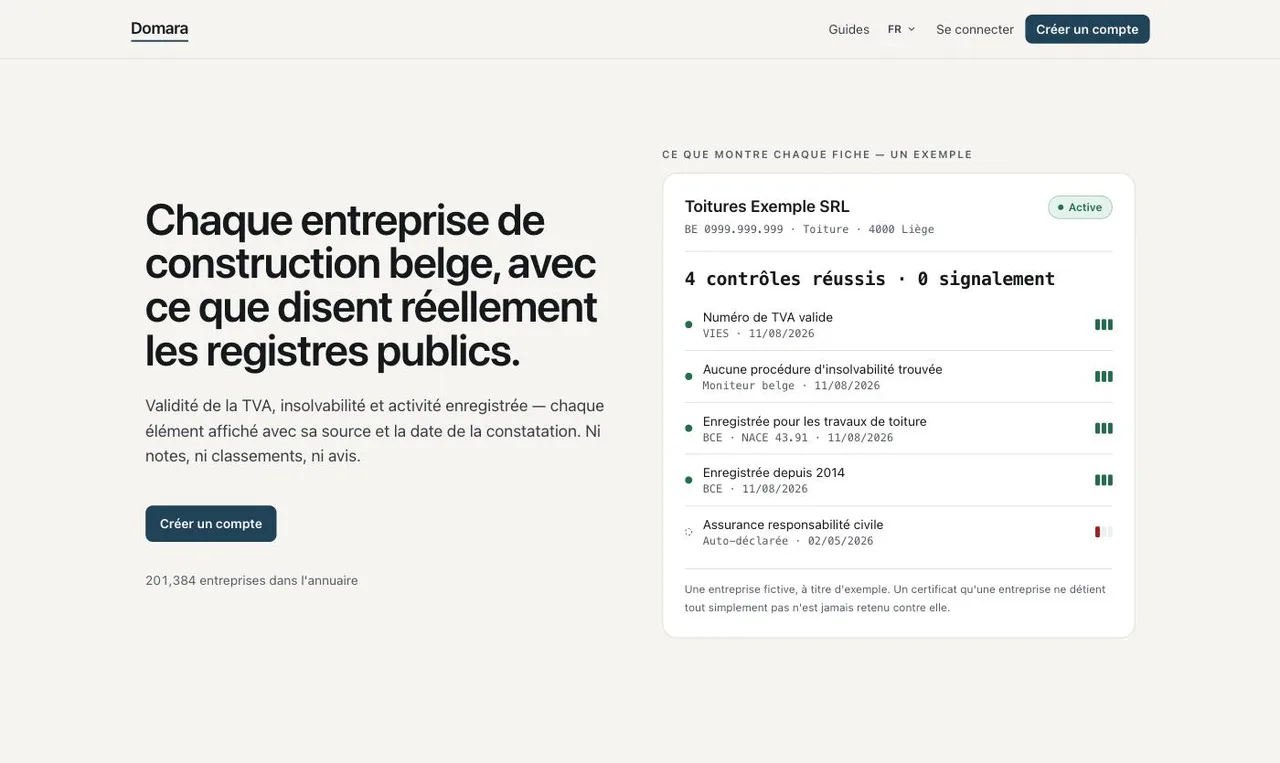
Domara — screenshot

Domara

2026

Product · public registers

A verification layer over Belgium’s construction register

Every Belgian construction firm, with what the public registers actually say about it: VAT validity, insolvency, registered trade. Each fact carries its source, the date it was observed and a confidence level — and nothing else. No score, no ranking, no reviews, and a missing record never published as a flag.

What it proves

That the legal constraints can live in the data model instead of on a policy page.

  • 200,000+ companies
  • KBO/BCE + VIES
  • FR · NL · EN
Visit domara.be
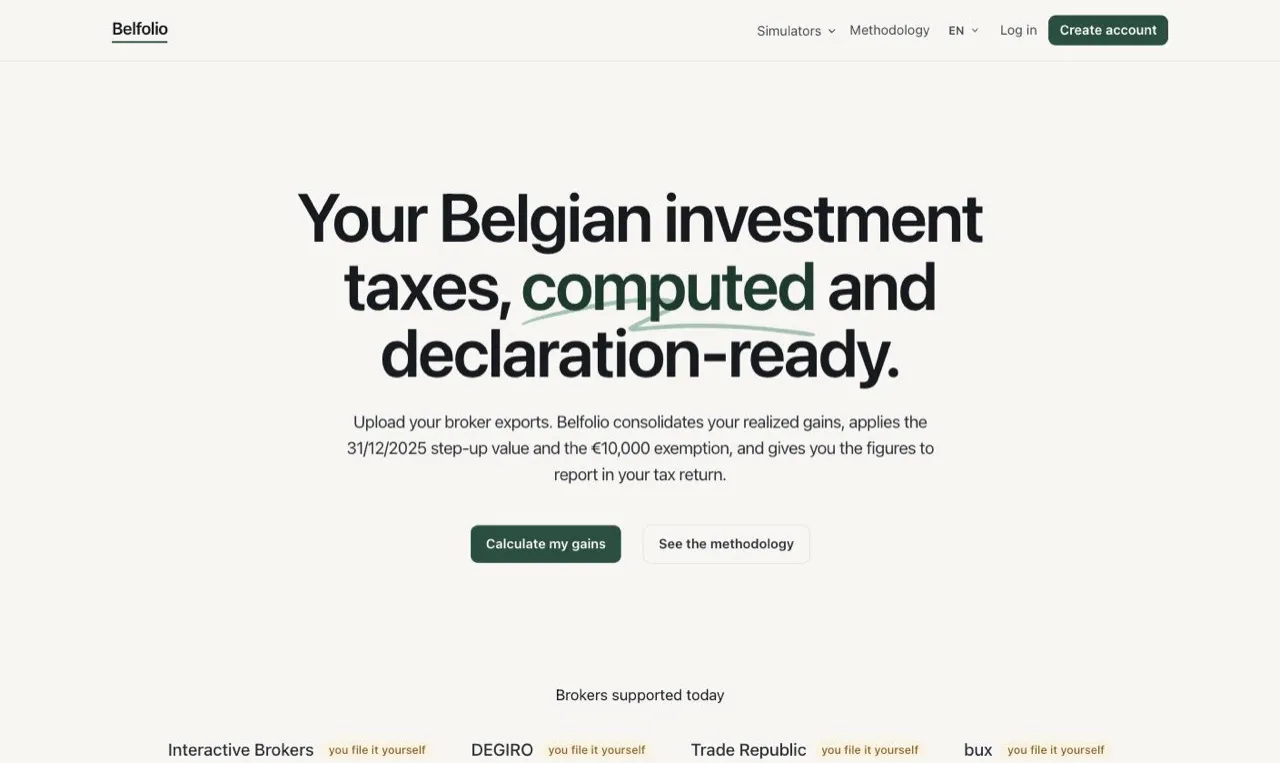
Belfolio — screenshot

Belfolio

2025

Product · solo build

Belgian investor tax & portfolio product

A domain where "roughly right" is worthless. Every figure carries its source, its "as of" date and a confidence level — because a number a user cannot audit is a number they cannot act on. Built solo, multilingual from day one.

What it proves

That I can make AI produce something correctness-critical and trustworthy.

  • tax + portfolio
  • solo build
  • 4 languages
Visit belfolio.be
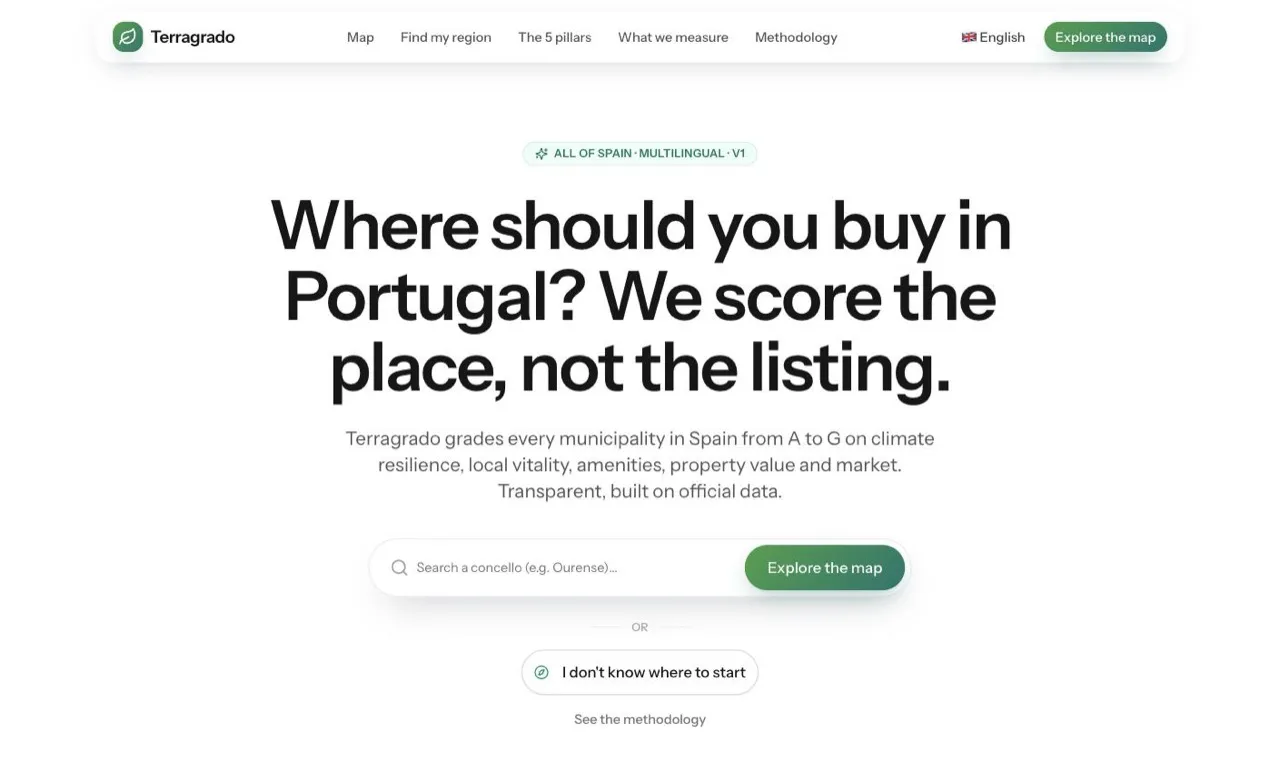
Terragrado — screenshot

Terragrado

2025

Product · data at scale

A location-scoring index for Europe

Grades 51,000+ European municipalities from A to G using 12+ official data sources. The opinion is the product: score the place, not the listing. Shipped in four languages, ES/FR/IT/PT.

What it proves

Rigour and product thinking holding up at scale.

  • 51,000+ municipalities
  • 12+ official sources
  • A–G grades
Visit terragrado.com
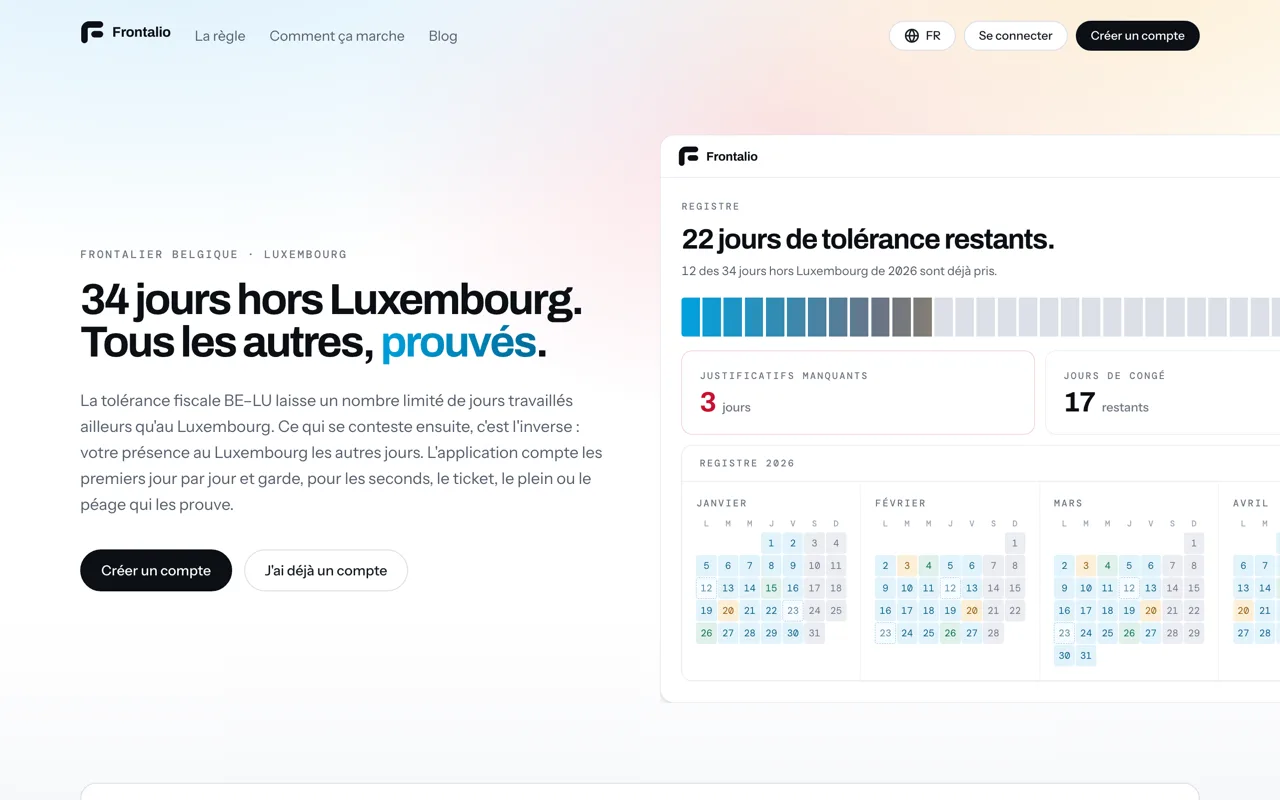
Giftify — screenshot

Giftify

Ongoing

Consulting · ongoing

Product consulting with a live business

Ongoing product work with a real company and real constraints — roadmap, interface decisions, and the unglamorous calls that keep a product coherent as it grows.

What it proves

Not theory — how I work with a team today.

  • product consulting
  • live business

Private engagement

05 — Reach

Four languages, on purpose.

Multilingual is not a line on a CV here — it is a market decision. Terragrado ships across several European countries because the person designing it can read the sources, write the copy and talk to the users in their own language. Same for the products I build with you.

enEnglish
Fluent — daily working language
frFrançais
Native
esEspañol
Fluent
deDeutsch
Working proficiency

06 — About

The short version.

Self-taught, then obsessive about craft, then a teacher — and that last part changed how I build.

I started as a curious self-taught builder in Liège, taking things apart until they made sense. Craft came next: interfaces, typography, the difference between a screen that works and one that feels right.

Then I taught. Explaining a system to someone learning it forces you to actually understand it — and to drop the jargon. That is still the most useful professional skill I have.

Today I design and ship complete products, using AI as an accelerator on the parts I already know how to judge. Belgian roots, European scope.

07 — Contact

Have an idea that should exist?

Tell me what you are trying to build and where you are stuck. If I am not the right person, I will say so and point you somewhere better.